
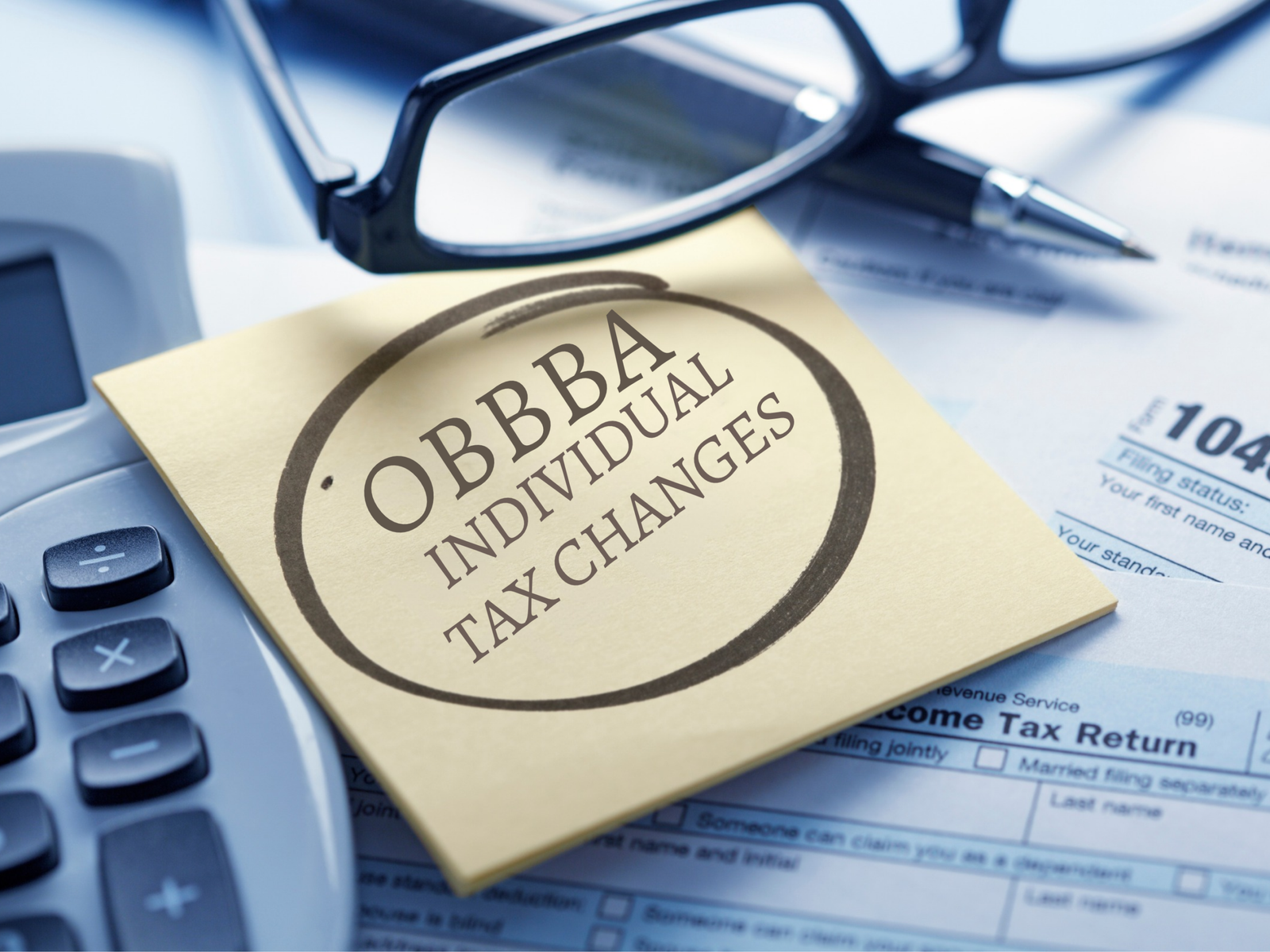
The One Big Beautiful Bill Act (OBBBA) was signed into law on July 4, 2025. The OBBBA individual changes affect many individuals and families directly, influencing tax deductions, credits and financial planning. Some changes are permanent, while others expire in a few years. Understanding which provisions apply to you can make tax planning easier.
This guide covers the main OBBBA individual tax changes in plain language, helping you understand the new rules, eligibility requirements and potential tax savings.
The Big Picture
The OBBBA individual changes focus on two main areas:
- Making many existing tax rules permanent. These provisions came from the 2017 Tax Cuts and Jobs Act (TCJA) and were originally scheduled to expire after 2025.
- Introducing new deductions and credits. Many of these benefits are temporary and are scheduled to end after 2028.
Understanding the difference between permanent and temporary provisions can help you plan your finances more effectively.
Permanent Changes
Tax Brackets Stay Put
The seven federal income tax brackets (10%, 12%, 22%, 24%, 32%, 35% and 37%) are now permanent. Without the OBBBA, tax rates would have increased in 2026 under the scheduled expiration of several TCJA provisions.
This change gives most taxpayers greater certainty when planning their annual income and tax payments.
A Higher Standard Deduction
The standard deduction is the amount you can subtract from your income before calculating your federal income tax without itemising deductions. Under the OBBBA individual changes, the deduction increased and will continue to be adjusted for inflation.
- 2025: $15,750 for single filers and $31,500 for married couples filing jointly.
- 2026: $16,100 for single filers and $32,200 for married couples filing jointly.
Because the standard deduction is relatively large, many taxpayers may find that taking it is more beneficial than itemising individual expenses.
Child Tax Credit
The Child Tax Credit increased to $2,200 per qualifying child and will be adjusted for inflation in future years.
To qualify, the child and at least one parent must have a valid Social Security number, subject to the applicable eligibility requirements.
This provision may provide additional tax relief for eligible families with children.
Other Permanent Tax Provisions
Several other OBBBA individual changes affect taxpayers and business owners:
- Personal exemptions: These remain at zero.
- Miscellaneous itemised deductions: Many deductions, including unreimbursed employee expenses, remain eliminated.
- Qualified business income (QBI) deduction: The 20% deduction is permanent, benefiting eligible owners of pass-through businesses.
- Estate and gift tax exemption: The exemption increases to $15 million per person starting in 2026.
These provisions may influence long-term tax planning, estate planning and decisions about business ownership.
New Temporary Deductions (2025–2028)
Some of the most widely discussed OBBBA individual changes introduce temporary tax deductions. Although these provisions may reduce taxable income for eligible taxpayers, each comes with specific requirements, income limits and an expiration date.
No Tax on Tips
Eligible workers in occupations that customarily receive tips may deduct up to $25,000 in qualified tip income.
To qualify, tips must meet the applicable requirements, including being voluntary and properly reported. The deduction is also subject to occupation-based eligibility rules and income limitations.
The deduction begins to phase out when modified adjusted gross income exceeds approximately $150,000 for single filers and $300,000 for married couples filing jointly.
Importantly, qualified tips remain subject to Social Security and Medicare taxes. The deduction reduces eligible federal income tax liability rather than eliminating all taxes on tips.
No Tax on Overtime
Eligible employees may deduct the qualified overtime premium portion of their pay. For example, when an employee receives time-and-a-half pay, the qualifying premium is generally the additional half-rate portion.
The deduction is limited to:
- $12,500 for individual filers.
- $25,000 for married couples filing jointly.
The same general income phase-out thresholds apply as for the tips deduction. The overtime must meet applicable federal wage-law requirements, so not every extra hour, bonus or additional payment qualifies.
The $6,000 Senior Deduction
Taxpayers aged 65 or older may qualify for an additional $6,000 deduction per eligible person. A married couple in which both spouses qualify may be eligible for a combined deduction of $12,000.
The deduction can be claimed whether the taxpayer itemises deductions or takes the standard deduction. It is also separate from the existing additional standard deduction available to eligible seniors.
The deduction phases out when modified adjusted gross income exceeds $75,000 for single filers or $150,000 for joint filers.
This provision does not eliminate tax on Social Security benefits. Instead, it reduces taxable income for eligible individuals.
Car Loan Interest Deduction
Eligible taxpayers may deduct up to $10,000 in qualifying car loan interest annually for a new vehicle assembled in the United States.
The main requirements include:
- The loan must have originated after 2024.
- The vehicle must be new and assembled in the United States.
- The vehicle must be used for personal purposes.
- Income limitations apply.
Used vehicles and leased vehicles do not qualify under this provision. The deduction begins to phase out above $100,000 in modified adjusted gross income for single filers and $200,000 for joint filers.
Eligible taxpayers can claim the tips, overtime, senior and car loan interest deductions without itemising. These deductions are reported on the new Schedule 1-A.
SALT Cap Relief
The state and local tax (SALT) deduction includes eligible property taxes and state income or sales taxes. Under the 2017 law, the deduction was generally capped at $10,000.
The OBBBA increases the SALT deduction cap to:
- $40,000 for 2025, with an inflation adjustment to approximately $40,400 for 2026.
- The higher cap generally applies through 2029.
- The cap is scheduled to return to $10,000 in 2030.
The increased deduction is subject to income-based limitations. For taxpayers with modified adjusted gross income above approximately $500,000, the deduction begins to phase down.
This is one of the OBBBA individual changes that may be particularly relevant to homeowners and taxpayers in high-tax states.
If you previously chose the standard deduction because your eligible itemised expenses did not exceed the $10,000 SALT cap, it may be worth calculating your deductions again. The higher cap could make itemising more beneficial, depending on your overall financial situation.
Changes to Charitable Giving
Two significant changes to charitable deductions are scheduled to begin in 2026.
- Charitable deductions for non-itemisers: Eligible taxpayers who take the standard deduction may deduct qualifying cash donations to charity, up to $1,000 for individuals and $2,000 for married couples filing jointly.
- A 0.5% floor for itemisers: Charitable contributions generally must exceed 0.5% of adjusted gross income before qualifying amounts can be deducted.
The law also limits the tax benefit of itemised deductions for taxpayers in the top 37% income tax bracket. For these taxpayers, the value of itemised deductions is generally limited using a 35% rate.
These changes may affect how individuals approach charitable donations and year-end tax planning.
Other OBBBA Individual Changes Worth Knowing
Trump Accounts for Children
The law establishes a new type of savings account for eligible children under 18.
Children born between 2025 and 2028 may qualify for a $1,000 government-funded contribution to their account, subject to applicable requirements. Parents, relatives and employers may also be able to contribute.
The funds are invested, and withdrawals are generally restricted until the child reaches age 18, subject to the account’s governing rules.
Mortgage Insurance Premiums
Beginning in 2026, eligible mortgage insurance premiums can once again be treated as deductible mortgage interest for taxpayers who itemise, subject to applicable requirements.
Homeowners should review their mortgage expenses to determine whether this provision could affect their deductions.
Student Loans and Education
The OBBBA also changes several education-related tax and financial provisions, including federal student loan repayment rules and expanded permitted uses of 529 college savings plans.
The changes to 529 plans include certain K–12 expenses and qualifying job-training costs. Families should review the applicable rules before using education savings for these expenses.
Form 1099-K Reporting
The reporting threshold for payment apps and online marketplaces to issue Form 1099-K reverted to more than $20,000 in payments and more than 200 transactions under the applicable federal rules.
This means some people earning money through side businesses or online marketplaces may receive fewer reporting forms than under previously planned lower thresholds.
However, not receiving Form 1099-K does not automatically make the income tax-free. Taxpayers must still report taxable income according to the applicable rules.
What Is Temporary and What Is Permanent?
The following table summarises key OBBBA individual changes and their expected duration.
| Tax provision | Status |
|---|---|
| Federal income tax brackets | Permanent |
| Higher standard deduction | Permanent |
| Child Tax Credit of $2,200 | Permanent, with inflation adjustments |
| 20% QBI deduction | Permanent |
| $15 million estate and gift tax exemption | Effective from 2026, with applicable adjustments |
| Deduction for qualified tips | Scheduled to expire after 2028 |
| Deduction for qualified overtime | Scheduled to expire after 2028 |
| Additional senior deduction | Scheduled to expire after 2028 |
| Car loan interest deduction | Scheduled to expire after 2028 |
| Higher SALT deduction cap | Scheduled to expire after 2029 |
Understanding these timelines can help you distinguish between benefits that may support long-term financial planning and temporary deductions that require closer attention.
Practical Steps to Take Now
Knowing about the OBBBA individual changes is only the first step. Taking action can help you determine which provisions may apply to your circumstances.
- Review your tax withholding. New deductions may affect how much federal income tax you need withheld from your pay. Review your W-4 and make adjustments if necessary.
- Keep accurate records. Retain pay statements showing tips and overtime, as well as car loan interest statements and other supporting documents.
- Reassess itemised deductions. The higher SALT cap may change whether itemising is more beneficial than claiming the standard deduction.
- Check income phase-outs. Several new deductions decrease as income rises. Your income level and the timing of income or deductions may affect your eligibility.
- Review your state’s tax rules. States do not necessarily adopt every federal tax change. Some income or deductions treated differently for federal purposes may receive different treatment on your state return.
- Plan around expiration dates. Several temporary deductions are scheduled to end after 2028. Avoid relying on them for long-term financial decisions without considering what happens when they expire.
A review with a qualified tax professional can help you understand which provisions apply to you and identify any planning opportunities.
Key Takeaways: OBBBA Individual Changes
Here are the main points individuals and families should remember:
- Federal tax brackets are permanent. The seven brackets range from 10% to 37%.
- The standard deduction is higher. For 2026, it is $16,100 for single filers and $32,200 for married couples filing jointly.
- The Child Tax Credit increased to $2,200 per qualifying child, with future inflation adjustments.
- New deductions for tips, overtime, seniors and qualifying car loan interest are generally available for 2025 through 2028.
- The SALT deduction cap increases to $40,000 for 2025, with inflation adjustments and a scheduled return to $10,000 in 2030.
- Income limits and eligibility requirements apply. Not every taxpayer will qualify for every deduction.
- State tax rules may differ. Federal tax benefits do not automatically guarantee equivalent state tax treatment.
The most important takeaway is that the impact of these changes depends on your income, filing status, family circumstances and eligible expenses.
Redbud Tax & Advisors Tip
Don’t wait until filing season. Many of the new deductions depend on records you need to maintain throughout the year. If you earn tips or overtime, ask your employer how these amounts are reported on your W-2. If you bought a new car, keep your loan interest statement. And if your income is near a deduction phase-out threshold, a mid-year review can help you assess whether the timing of income or deductions could affect your tax liability. A short check-in now can be easier than correcting a tax return later.
How Redbud Tax & Advisors Can Help
The OBBBA introduces important tax changes for individuals and families, particularly eligible workers who receive tips or overtime, seniors, homeowners in high-tax states and families with children.
However, the rules include income limits, eligibility requirements and expiration dates that can affect the amount of tax relief available to each taxpayer.
At Redbud Tax & Advisors, we help clients understand how the OBBBA individual changes may affect their tax returns and financial plans. Whether you need help reviewing deductions, assessing your eligibility or planning for upcoming tax years, our team can help you understand your options.
Contact Redbud Tax & Advisors to schedule a conversation and plan for the tax changes that matter to you.